
Active Warrants in Kern County CA are public records that anyone can check to see if a person or case still carries an outstanding legal obligation. When you type “Kern County active warrants” into a reliable database, the system pulls the warrant number, issue date, type of warrant, and current status from the sheriff’s official warrant database. This information helps families, employers, and legal professionals verify whether a name appears on the list of active warrant records, saving time and preventing surprise encounters with law enforcement. By using specific search criteria such as warrant search by name, case number, or warrant number, users can quickly locate the exact record they need and understand if the warrant is still active, recalled, or already satisfied.
Active Warrants searches also reveal details like the issuing court, the nature of the alleged offense, and any updates to the warrant status, which are essential for anyone needing accurate warrant lookup by name or case reference. The Kern County active warrants portal integrates “Kern CA active warrants” and “outstanding warrants” keywords to ensure results are precise and current, allowing a swift warrant status check without navigating unrelated data. This transparent approach supports community safety and personal responsibility while respecting the public’s right to access warrant information.
How to Search Active Warrants
Searching for active warrants in Kern County CA is a simple process that takes just a few minutes when you use the right tools. The sheriff’s office keeps a public database where you can look up warrants by name by reviewing official arrest lookup official records, case number, or warrant number. You do not need an account or special permission to view these records. All you need is basic identifying information about the person or case you wish to check, and you can pull up the current warrant status from official sources.
The easiest way to begin your search is through the sheriff’s online portal, which shows you real-time warrant records from county authorities. You can also call the sheriff’s office directly if you prefer to speak with someone about a specific record. Whichever method you choose, the system shows you the warrant number, the type of warrant, the issuing court, and whether the warrant is still active, recalled, or already resolved.
Official Search Portal: https://www.kernsheriff.org
Steps to Search
- Visit the Kern County Sheriff’s Office website at https://www.kernsheriff.org and find the warrant search section on the main page.
- Enter the full legal name of the person you are checking, or type in the warrant number or case number if you have it.
- Review the search results that appear, which show the warrant type, issue date, and current status of the record.
- Write down or print the warrant details you need, then contact the sheriff’s office or the listed court if you have questions about the record.
Warrant Search by Name
A name-based search is the most common way to check Kern County CA active warrants. You type the person’s first and last name into the search field, and the database returns matching records from the sheriff’s files. This method works well when you do not know the case number or warrant number but need to find out if someone has an outstanding obligation. The search shows you every warrant tied to that name within the county system.
When you search by name, make sure you spell the name correctly and include any known middle name if you have that detail. Common names may return several results, so you will need extra details like a date of birth or address to pick the right person. The portal lists all matches side by side so you can compare details and select the correct record without confusion.
Search by Case or Reference Number
If you already have a case number or reference number from a court notice, police report, or legal document, you can use it to find a specific warrant record. This search method gives you a direct match because each case carries its own unique number in the county system. You skip the need to sort through name matches and go straight to the exact record you need.
Reference numbers come from the court that handled the original case, and they remain linked to that case for the entire life of the warrant. When you enter the number, the system displays the warrant details, the person named, the issuing court, and any status updates. This approach saves time for attorneys, employers, and individuals who already hold a court document.
Information Needed for a Warrant Search
Before you start a warrant search, gather the basic facts that help the system return the right record. The sheriff’s portal needs at least one strong identifier, such as a full name, date of birth, or warrant number. You may also want to have a case number ready if you received a court notice or attorney letter. With these details on hand, your search runs smoothly and returns accurate results.
- Full legal name, including any known aliases or maiden names
- Date of birth or approximate age range
- Case number, warrant number, or court reference number
- Last known city or ZIP code within Kern County
- Any court dates, ticket numbers, or attorney references tied to the case
Active Warrant Information
An active warrant record contains a set of standard details that tell you what the document is, who it names, and what action it permits. Each piece of data serves a purpose and helps you understand the legal standing of the person or case. The Kern County active warrants database lists these fields in a clear format so you can read them at a glance. You will always see the warrant number first, followed by the person named, the type of warrant, the issuing court, and the current status.
Warrant Number and Issue Date
The warrant number is the unique code that the court uses to track the warrant through the system. It also shows the date the warrant was signed by a judge, which marks the official start of the legal obligation. The issue date tells you how long the warrant has been in the system, which helps you judge the urgency of any action you need to take.
Person Named on the Warrant
Every warrant lists the full legal name of the person it covers, along with identifying details like the date of birth when available. This section confirms who the court has ordered law enforcement to act upon. You should match this name carefully with the person you are checking to avoid confusing one record with another.
Warrant Type
The warrant type tells you the reason the court issued the document, such as an arrest warrant, bench warrant, or failure-to-appear order. Each type has its own legal meaning and its own process for resolution. Knowing the type helps you understand what step you need to take next, whether that is turning yourself in, paying a fine, or appearing in court.
Issuing Court or Authority
The issuing court or authority field tells you which judge or legal body signed the warrant into effect. In Kern County CA, this is usually the Kern County Superior Court or a local municipal court. This detail matters because you must contact that exact court to resolve the warrant or request a hearing.
Warrant Status
The warrant status field shows whether the warrant is active, recalled, quashed, or already satisfied. An active status means law enforcement can still act on the warrant, while a recalled or quashed status means the court has canceled it. Always check this field first, as it tells you whether the warrant remains a current legal issue.
Warrant Search Results
After you run a search, the portal shows you a list of records that match your query. Each entry on the list covers a specific warrant, and you need to read through the details to pick the correct one. The search results give you enough data to confirm a match without revealing sensitive personal information to the public. You can then use the listed details to act on the warrant, whether that means contacting a lawyer, visiting the court, or turning yourself in at the sheriff’s office.
Identifying the Correct Record
When several names appear similar on the search results, you need extra details to pick the right one. The database helps by showing the date of birth, last known city, and warrant issue date for each match. Compare these fields against the person you are checking to confirm you have the right record before taking any action.
Matching Names and Identifying Details
The system often returns more than one result for common names, so you should match at least two or three details at once. A date of birth, a middle name, or a known address can settle the question quickly. If you still feel unsure, call the sheriff’s office to verify which record applies to the person you are researching.
Reviewing Warrant Status
The status column on the search results tells you if the warrant is active, recalled, or already resolved. Always read this field first because it decides whether the person needs to take immediate legal action. A recalled or quashed warrant means the court has canceled the order, even if the record still appears in the database.
Checking Issue and Update Dates
The issue date tells you when the warrant first became active, while the update date shows the last time the system refreshed the record. These dates help you judge how recent the information is and whether you need to confirm with the court. An old update date does not always mean the warrant is inactive, so always double-check with the source.
Confirming Record Information
Once you pick the right record, write down the warrant number, type, status, and issuing court. You can use these details to speak with the court clerk, an attorney, or the sheriff’s office about next steps. A clear copy of the record also helps you avoid mistakes if you decide to address the warrant in person.
Types of Active Warrants
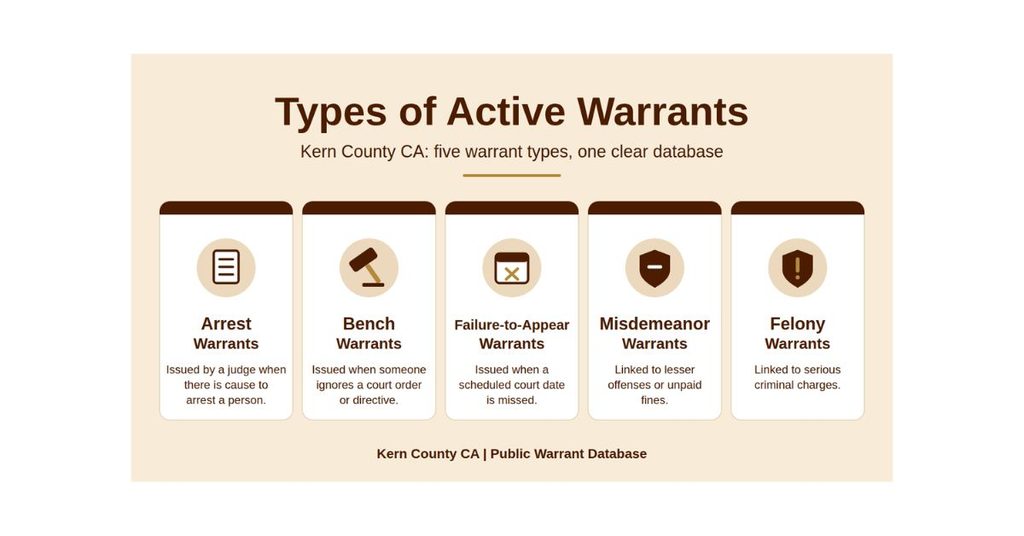
Kern County CA issues several types of warrants, each tied to a different legal situation. Knowing the type helps you understand what the court expects from the person named on the warrant. Some warrants deal with missed court dates, while others come from criminal charges or unpaid fines. The public database lists each type clearly so you can tell them apart at a glance.
Arrest Warrants
An arrest warrant gives law enforcement the legal right to take a person into custody based on a criminal charge or investigation. A judge signs the warrant after through available inmate population directory resources, reviewing evidence presented by a prosecutor. The warrant stays in the system until the court recalls it, law enforcement makes an arrest, or the person named resolves the case.
Bench Warrants
A bench warrant is issued directly by a judge when a person fails to follow a court order. Common reasons include missing a court date, ignoring a subpoena, or refusing to comply with probation terms. The warrant lets law enforcement arrest the person and bring them before the court to explain the failure.
Failure-to-Appear Warrants
A failure-to-appear warrant comes from missing a scheduled court hearing. The court issues the warrant automatically once a person fails to show up without a valid reason. Resolving this type usually involves appearing before the judge, explaining the absence, and paying any fines the court sets.
Misdemeanor Warrants
Misdemeanor warrants relate to lesser criminal charges such as petty theft, simple assault, or certain traffic offenses. The court signs these warrants when a person faces a misdemeanor charge and either gets summoned or fails to appear. These cases often resolve faster than felony cases and may only require a fine or a short court hearing.
Felony Warrants
Felony warrants cover serious criminal charges like burglary, drug trafficking, or violent offenses. A judge approves the warrant after a grand jury or preliminary hearing shows enough evidence for a case. Resolving a felony warrant typically requires a lawyer and a court appearance, as the penalties are much higher than misdemeanor cases.
Other Warrant Types
Other warrant types include search warrants, witness warrants, and civil warrants tied to family court or debt cases. Each serves a different legal purpose, but they all appear in the public database when active. The warrant type field tells you which category applies, so you know who to contact for resolution.
Status and Case Information
Warrant status is the most important detail to check because it tells you whether the court still expects action. The status field changes over time as the case moves through the system. You should always read this section first when you pull up a warrant record, as it guides the next steps you need to take. Knowing the status prevents wasted trips to the courthouse and helps you plan the right legal response.
Active and Outstanding Warrants
An active or outstanding warrant means the court has not canceled the order, and law enforcement can still act on it. The person named must resolve the case by appearing in court, posting bail, or clearing the record through other legal steps. These warrants stay in the database and remain visible to the public until the court updates them.
Recalled Warrants
A recalled warrant has been canceled by the court, often after a person resolves the original issue or posts bail. The warrant remains visible in the system for record-keeping purposes but no longer allows law enforcement to act on it. You can confirm a recalled status by calling the court clerk or checking the issue date against the recall notice.
Quashed or Withdrawn Warrants
A quashed or withdrawn warrant has been permanently canceled by a judge and removed from active enforcement. The court issues this order after reviewing new facts, dismissing the original charge, or accepting a resolution. The record stays on file for history but carries no current legal weight.
Warrant-Related Case Information
Warrant-related case information includes the case number, court hearings, and any related filings that connect to the warrant. This data helps you understand the full picture of the legal situation, including prior hearings, plea deals, or sentence details. Lawyers and legal professionals use this data to build a defense or prepare court appearances.
Warrant Status Updates
Warrant status updates happen whenever the court takes action on a case, such as recalling a warrant, scheduling a new hearing, or dismissing charges. The sheriff’s database refreshes these changes on a regular schedule, so the status you see should match the most recent court action. If the status looks out of date, contact the court directly for confirmation.
What to Do About an Active Warrant
Finding an active warrant on your record can feel stressful, but there are clear steps you can take to resolve it. The first thing to do is confirm the details so you know exactly what you are dealing with. Next, you should contact the right court or lawyer to start the resolution process. Acting quickly helps you avoid arrest, lost job opportunities, and other legal problems that come with an outstanding warrant.
Confirming Warrant Information
Start by pulling up your record on the sheriff’s portal and writing down the warrant number, type, and issuing court. Double-check the spelling of your name, the date of birth, and the listed charges. Accurate information helps you avoid confusion when you contact the court or a lawyer about the case.
Contacting the Appropriate Court or Authority
Once you have the details, call the court listed on the warrant and ask how to clear the record. The clerk can tell you whether you need to appear in person, pay a fine, or post bail. Some cases can be handled by phone or mail, while others require a court visit.
Resolving a Failure-to-Appear Warrant
If the warrant stems from a missed court date, you usually need to schedule a new hearing and explain your absence to the judge. Bring any proof you have for the missed date, such as medical records or emergency documents. The court may lift the warrant after you appear and satisfy any new conditions the judge sets.
Legal Assistance and Court Procedures
Hiring a lawyer is a smart move when you face an arrest warrant or felony charge. A lawyer can appear on your behalf, file motions to recall the warrant, and negotiate with the prosecutor for a lighter outcome. Court procedures vary by case type, but legal help speeds up the process and lowers the risk of missteps.
- Pull up your warrant details from the sheriff’s online portal
- Call the issuing court to ask about resolution steps
- Gather documents, IDs, and proof related to the case
- Speak with a criminal defense lawyer for serious charges
- Appear in court or post bail as the judge directs
Warrant Records That Are Unavailable
Some warrant records do not appear in public searches for legal or administrative reasons. Understanding why a record is missing helps you avoid wasting time on a fruitless lookup. The sheriff’s portal only shows information that state law allows the public to access, and certain cases fall outside that scope. If you cannot find a record, the cause usually fits one of a few common categories listed below.
Recently Issued Warrants
Warrants that a judge has just signed may take a short time before they show up in the public database. The system needs time to process the new through available busted mugshots resources, record and link it to the right case file. If you cannot find a recent warrant, wait a day or two and try the search again.
Sealed or Restricted Records
Sealed or restricted warrants are closed to the public by court order, often to protect a victim, witness, or ongoing investigation. Only the people named in the case, their lawyers, and law enforcement can see the full details. The portal shows a sealed status instead of the warrant details to honor the court order.
Incorrect or Incomplete Search Details
If you spell the name wrong or leave out key details, the system may fail to return a matching record. Double-check the spelling of the name, the date of birth, and any reference numbers you used. A small typo can hide a valid warrant from your search results.
Delays in Warrant Status Updates
Court clerks and sheriff staff update warrant records on a routine schedule, so a recently changed status may not appear right away. If the status looks wrong, call the court clerk to confirm the latest details. Updates can take a few business days to flow through to the public portal.
Contact Information
You can reach the Kern County Sheriff’s Office through the channels listed below for warrant questions, non-emergency help, and information about incarcerated persons. The office stays open every day, all day, so you can call any time you need assistance with a warrant or related case. For emergencies, dial 911 instead of the listed numbers.
- Official Website: https://www.kernsheriff.org
- Official Location: 1350 Norris Road, Bakersfield, CA 93308
- Non-Emergency Phone: (661) 391-7500
- Incarcerated Person Information: (661) 391-7500
- Information Line: (661) 391-7500
- Office Hours: 24/7
Frequently Asked Questions
Active warrants in Kern County affect many residents and visitors. Knowing how to locate a warrant, understand its status, and act quickly can prevent unexpected arrests and fines. The Kern County Sheriff’s Office offers a free online database that anyone can check any time. This service helps people clear misunderstandings, plan legal steps, and stay informed about public safety. Below are common questions about Kern County active warrants and how to use the official search tools.
How can I search for Kern County active warrants by name?
Visit the Kern Sheriff’s website and select the warrant lookup page. Enter the full name, then click search. Results show the warrant type, issue date, and case number. If the name matches multiple records, review each entry for birthdate or middle initial to confirm. No login or fee is required. After confirming the details, contact the non‑emergency line at 661‑391‑7500 for next steps.
What information is needed to check Kern CA using a case number?
Gather the exact case number from a citation, court notice, or police report. On the online warrant search, choose the case‑number option and type the digits exactly as shown. The system returns the warrant’s current status, bond amount, and court location. This method reduces errors that can occur with name searches and speeds up verification.
Can I find outstanding warrants in Kern County without creating an account?
Yes. The public database does not require registration. Simply access the search page, pick the “warrant number” or “name” field, and submit the query. Results appear instantly, displaying whether the warrant is active, inactive, or resolved. This open access supports transparency and helps individuals address legal matters promptly.
Where do I go to resolve a Kern County after I find it?
Call the non‑emergency line at 661‑391‑7500 to speak with a warrant specialist. They will explain bail options, court dates, and any required documentation. You may need to appear at the Kern County Jail located at 1350 Norris Road, Bakersfield, CA 93308, or attend a scheduled hearing. Paying bail or appearing in court clears the warrant.
What steps should I take if I discover an outstanding warrant for a family member?
First, verify the warrant details using the online search. Then, advise the family member to contact an attorney for legal advice. Arrange transportation to the sheriff’s office or courthouse and bring identification, the warrant notice, and any payment method for bail. Prompt action reduces the risk of surprise arrests and helps resolve the case efficiently.